
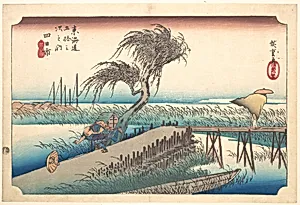
東海道五十三次之内 四日市 三重川|Mie River at Yokkaichi
Medium
Woodblock print; ink and color on paper
Dimensions
8 7/8 x 13 3/4 in. (22.5 x 34.9 cm)
Classification
Prints
Culture & Period
Japan · Edo period (1615–1868)
Department
Asian Art
Museum
Metropolitan Museum of Art, New York, NY
Credit
The Howard Mansfield Collection, Purchase, Rogers Fund, 1936
Accession Number
JP2484
Rights
Public Domain
Tags
Art Historical Context
Utagawa Hiroshige *Mie River at Yokkaichi* (1834) is a captivating woodblock print from his series *The Fifty-three of the Tōkaidō*. This iconic Edo-period (1615–1868) project immortalized the 53 post stations along Japan's vital coastal highway connecting Edo (modern Tokyo) Kyoto. Travel along the Tōkaidō was restricted to commoners under the shogunate's policies, making Hiroshige's vivid depictions a window into popular culture and the romance of pilgrimage and commerce. The print captures the 16th station at Yokkaichi, where travelers navigate the gusty Mie River crossing via a sturdy bridge, surrounded by bending trees and figures bracing against the wind. Hiroshige's ukiyo-e mastery shines in his atmospheric effects—subtle gradients of color and dynamic lines evoke the river's flow and blustery weather. Printed collaboratively with skilled carvers and printers, these *nishiki-e* (brocade pictures) used multiple woodblocks for vibrant inks, making art accessible to everyday viewers. Housed in the Metropolitan Museum of Art's Asian Art collection, this work exemplifies Hiroshige's influence on global art, inspiring Impressionists like Monet. It not only documents a bustling travel hub but celebrates Japan's natural beauty and human resilience during a time of isolationist prosperity.
About the Artist
Utagawa Hiroshige · 1826–1869
Utagawa Hiroshige (1797–1858), born Andō Tokutarō, was the last great master of Japanese ukiyo-e woodblock printmaking and one of the most influential landscape artists in history. Born in Edo (modern Tokyo) into a low-ranking samurai family serving as fire wardens, Hiroshige transformed landscape printmaking into a poetic meditation on nature, weather, and everyday life. His revolutionary approac...