
Military Fork
Unknown Artist
late 16th century
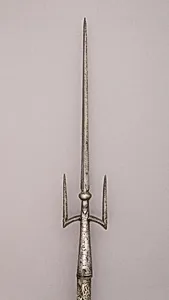
Medium
Steel, wood, silver
Dimensions
L. 91 in. (231.1 cm); L. of head 23 1/2 in. (59.7 cm); W. 4 in. (10.2 cm); Wt. 6 lbs. 1.5 oz. (2764.1 g)
Classification
Shafted Weapons
Culture
French
Department
Arms and Armor
Museum
Metropolitan Museum of Art, New York, NY
Credit
Bashford Dean Memorial Collection, Gift of Edward S. Harkness, 1929
Accession Number
29.156.40
Rights
Public Domain
Art Historical Context
This imposing *Military Fork* from late 16th-century France the formidable shafted weapons wielded by infantry during the Renaissance era. Crafted from durable steel for the broad, pronged head—measuring 23½ inches long—and a sturdy wooden shaft extending the total length to over 7½ feet, it weighs a hefty 6 pounds. Subtle silver accents highlight its construction, blending functionality with restrained ornamentation typical of French armorer's work. Developed amid the turbulent Wars of Religion and the rise of professional armies under kings like Henry IV, the military fork was designed to counter cavalry charges. Its Y-shaped steel head could trap lances, unhorse riders, or impale foes at a safe distance, making it a key tool for foot soldiers in pike-and-shot formations. This weapon reflects the era's shift toward massed infantry tactics, where reach and piercing power decided battles. Now part of the Metropolitan Museum of Art's renowned Arms and Armor collection—thanks to the 1929 gift from Edward S. Harkness via the Bashford Dean Memorial—this fork offers a tangible link to Europe's Age of Chivalry's twilight, showcasing masterful blacksmithing that prioritized lethal precision over lavish decoration.