
Military Procession
Polidoro da Caravaggio, second half 16th century
About this artwork
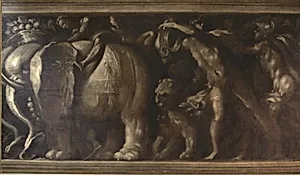
Behold *Military Procession*, a captivating oil on canvas by Polidoro da Carav, dating to the second half of 16th century. expansive work, measuring nearly 37 by 65 inches, depicts a grand parade of men and elephants, evoking the spectacle of ancient Roman triumphs.oused in the Metropolitan Museum of Art's Department of European Sculpture and Decor Arts, it exemplifies Italian Roman painting classified as decorative, intended for a palace wall or overdoor to immerse viewers in historical grandeur. Polidoro da Caravaggio a prominent Mannerist artist active in Rome, drew inspiration from antiquity, much like his frescoes on the Palazzo Milesi that animated classical processions. Created amid the vibrant cultural scene of Renaissance Rome, this piece reflects the era's fascination with imperial pageantry—elephants symbolizing exotic victories, as seen in triumphs of generals like Pompey. The horizontal format enhances its panoramic sweep, blending realism with dramatic flair. As a Rogers Fund acquisition in 1999, *Military Procession* invites us to ponder Rome's enduring legacy of power and spectacle, bridging ancient history with 16th-century artistry in a single, vivid frame.