
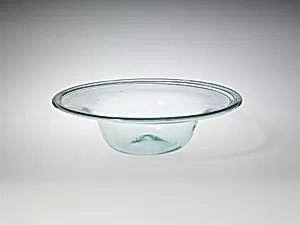
Milk Bowl
Unknown Artist
19th century
Medium
Free-blown glass
Dimensions
H. 4 1/8 in. (10.5 cm); Diam. 15 in. (38.1 cm)
Classification
Milk bowl
Culture
American
Department
The American Wing
Museum
Metropolitan Museum of Art, New York, NY
Credit
Rogers Fund, 1910
Accession Number
10.60.29
Rights
Public Domain
Art Historical Context
Nestled in the Metropolitan Museum of Art's American Wing, this 19th-century *Milk Bowl* exemplifies the humble yet masterful craftsmanship of early American glassmakers. Crafted by an unknown artist, the wide, shallow vessel—measuring just 4 1/8 inches high and an impressive 15 inches in diameter—was designed for a practical purpose: skimming cream from fresh milk on farms and in households across America. Acquired through the Rogers Fund in 0, it offers a tangible glimpse into everyday rural life during a time of expanding settlement and self-sufficiency. The bowl's medium, free-blown glass, highlights a skilled technique popular in 19th-century American glasshouses. In free-blowing, molten glass is gathered on a blowpipe and shaped solely by the artisan's breath and tools—no molds involved—resulting in the bowl's organic, slightly irregular form. This method, brought by European immigrants and adapted locally, allowed for affordable, functional wares that were both durable and beautiful in their simplicity. As a piece of American folk art, the *Milk Bowl* underscores the cultural importance of vernacular objects in U.S. decorative arts. It reflects the ingenuity of anonymous makers who turned basic needs into enduring designs, bridging utility and subtle artistry in the young nation's material culture. Visitors will appreciate its quiet elegance, a reminder of the hands that shaped America's heartland heritage.