
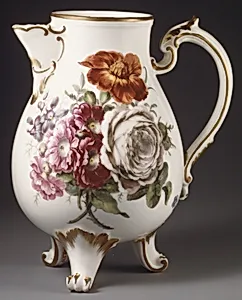
Milk jug
Medium
Hard-paste porcelain
Dimensions
Height: 5 1/4 in. (13.3 cm)
Classification
Ceramics-Porcelain
Culture
German, Ludwigsburg
Department
European Sculpture and Decorative Arts
Museum
Metropolitan Museum of Art, New York, NY
Credit
The George B. McClellan Collection, Gift of Mrs. George B. McClellan, 1941
Accession Number
42.205.270
Rights
Public Domain
Tags
Art Historical Context
This elegant milk jug, crafted between 1770 and 1775 at the Ludwigsburg Porcelain Manufactory in Germany, exemplifies the refined taste of 18th-century European court culture. Standing just over five inches tall, the hard-paste porcelain was likely part of a larger tea or coffee service, reflecting the growing popularity of these beverages among the aristocracy. The manufactory, established in 1758 under the patronage of Duke Carl Eugen of Württemberg, competed with other renowned German factories like Meissen to produce delicate wares that combined functionality with artistic beauty. Attributed to Friedrich Kirschner, the jug showcases the factory’s signature floral decoration, with painted blooms that highlight the material’s luminous white surface and fine translucency. Hard-paste porcelain, perfected in Europe only decades earlier, allowed for intricate detailing and durability that earlier soft-paste versions lacked. Such pieces were prized not only for daily use but as status symbols, embodying the Rococo era’s emphasis on lightness, elegance, and nature-inspired ornament. Today in the Metropolitan Museum’s collection, this modest yet charming object offers visitors a glimpse into the technical mastery and cultural rituals of Enlightenment-era Germany. Its modest scale and floral motifs invite us to appreciate how even everyday tableware became a canvas for artistic expression.