
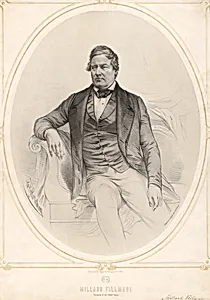
Millard Fillmore
Medium
Classification
Department
Smithsonian Collection
Museum
Smithsonian American Art Museum
Credit
National Portrait Gallery, Smithsonian Institution
Accession Number
NPG.80.42
Rights
Public Domain
Tags
Art Historical Context
In 1850, as Millard Fillmore ascended to the U.S. Presidency following Zachary Taylor's sudden death, artist Charles G. Crehen captured his likeness in this evocative print. Crehen, a mid-19th-century engraver active from the 1820s to around 1900, specialized in portraits that brought prominent figures to the public eye. Depicting Fillmore seated in a chair with a distinctive bowtie, the image reflects the formal portraiture style of the era, emphasizing dignity and authority befitting a New York lawyer, vice president, and brief chancellor of the University of Buffalo. This print holds historical significance as a snapshot of Fillmore's pivotal moment in American politics, amid national tensions over slavery and the Compromise of 1850. As a reproducible medium, prints like this one—likely a lithograph or engraving—democratized access to presidential imagery, allowing everyday citizens to own and display symbols of leadership. Housed in the Smithsonian American Art Museum's National Portrait Gallery, it underscores the role of visual culture in shaping public perception of leaders during a formative period in U.S. history. (178 words)