
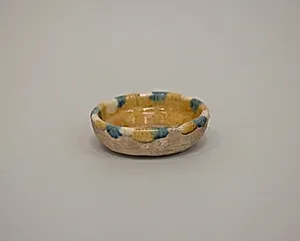
唐 三彩陶小盘|Minature dish
Unknown Artist
8th century
Medium
Earthenware with polychrome glaze (Sancai ware)
Dimensions
H. 5/8 in. (1.6 cm); Diam. 2 1/4 in. (5.7 cm)
Classification
Ceramics
Culture & Period
China · Tang dynasty (618–907)
Department
Asian Art
Museum
Metropolitan Museum of Art, New York, NY
Credit
Rogers Fund, 1930
Accession Number
30.76.50
Rights
Public Domain
Art Historical Context
This exquisite miniature dish, crafted in the 8th century during China's Tang dynasty (618–), exemplifies the vibrant Sancai ware tradition. Made of earthenware coated with polychrome lead glazes in shades of yellow, green and cream, it measures just 5/8 inch high and 2 1/4 inches in diametersmall enough to fit in the palm of your hand. These splashed glazes, a hallmark of Tang ceramics, created a lively,-like effect through innovative low-fired techniques, blending functionality with artistry. Sancai, meaning "three colors," reached its zenith under the prosperous Tang empire, a golden age of cultural exchange along the Silk Road. While grand Sancai camels and tomb figures are iconic, this diminutive dish hints at everyday elegance, possibly used for condiments, cosmetics, or as a child's toy. Its rarity underscores the Tang's mastery of glaze chemistry, influencing later East Asian pottery. Acquired through the Rogers Fund in 1930, this piece from the Metropolitan Museum of Art's Asian Art collection invites us to marvel at Tang ingenuity—where even the smallest objects shimmer with imperial splendor.