
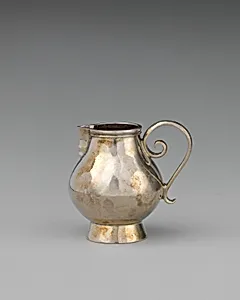
Miniature cream jug
ca. 1720–30
Medium
Silver
Dimensions
Height: 1 in. (2.5 cm)
Classification
Metalwork-Silver-Miniature
Culture
British, London
Department
European Sculpture and Decorative Arts
Museum
Metropolitan Museum of Art, New York, NY
Credit
The Joseph M. and Aimee Loeb May Collection, 1963
Accession Number
63.53.247
Rights
Public Domain
Art Historical Context
Nestled among the treasures of the Metropolitan Museum of's European Sculpture and Decor Arts department, this exquisite *Miniature cream jug* London silversmith David Clayton to around 1720–30. Crafted from silver and standing just 1 inch (2.5 cm) tall, it exemplifies the pinnacle of British metalwork during the early Georgian era. Such miniatures were prized collector's items, often displayed in cabinets of curiosities or used in dollhouses for the elite, showcasing the silversmith's mastery in scaling down functional forms without sacrificing detail. David Clayton, active in London, bore the hallmarks typical of the city's prestigious silver trade, regulated by the Worshipful Company of Goldsmiths. The jug's delicate proportions reflect the refined craftsmanship of the period, when silver objects symbolized wealth and sophistication amid Britain's growing prosperity from trade and empire. Its pitcher-like shape, complete with a spout and handle, mimics full-sized creamers used in tea services, blending utility with whimsy. A gift from The Joseph M. and Aimee Loeb May Collection in 1963, this tiny marvel invites visitors to marvel at the technical virtuosity required to fashion such precision. It reminds us how 18th-century artisans turned everyday silver into miniature art, bridging the worlds of decoration and delight.
About the Artist
David Clayton · 1659–1719
David Clayton was an American artist active during the New Deal era who contributed to the Index of American Design, the federal government's sweeping effort to document American decorative arts and folk traditions through watercolor illustration. Organized under the Works Progress Administration's Federal Art Project beginning in 1935, the Index employed artists in thirty-four states to render ev...