
Miniature Dress
Unknown Artist
12th–13th century
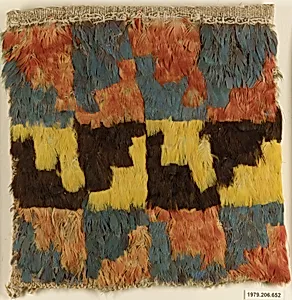
Medium
Cotton, feathers
Dimensions
H. 9 3/4 x W. 10 in. (24.8 x 25.4cm)
Classification
Textiles-Featherwork
Culture
Ica
Department
Arts of Africa, Oceania, and the Americas
Museum
Metropolitan Museum of Art, New York, NY
Credit
The Michael C. Rockefeller Memorial Collection, Bequest of Nelson A. Rockefeller, 1979
Accession Number
1979.206.652
Rights
Public Domain
Art Historical Context
This exquisite **Miniature Dress** from Ica culture of Peru's North Coast, dating to the 12th–13th century, showcases the mastery of pre-Columbianwork textiles. Crafted from cotton and vibrant feathers, it measures just 9 3/4 x 10 inches, suggesting it served as a ceremonial model, votive offering, or elite garment prototype rather than wearable attire. The Ica people's featherwork technique—meticulously attaching feathers to a cotton base—created shimmering, colorful mosaics that mimicked luxurious capes and tunics worn by nobility. Featherwork held profound cultural significance in ancient Andean societies like the Ica, symbolizing wealth, spiritual power, and connection to nature's avian spirits. Birds provided the feathers, often sourced from tropical species, dyed in brilliant hues to evoke otherworldly beauty. This rare surviving example highlights the technical ingenuity of Ica artisans, who layered and stitched feathers for durability and visual impact, a craft that predated and influenced later Inca traditions. Now part of The Michael C. Rockefeller Memorial Collection at The Metropolitan Museum of Art, this miniature marvel invites us to marvel at the Ica's artistic legacy, bridging everyday materials with divine artistry in the pre-Columbian Americas.