
Miniature Litter Section
Unknown Artist
11th–late 15th century
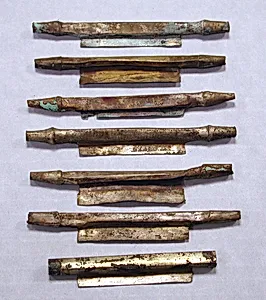
Medium
Silver (hammered), gilt
Dimensions
Length 4-11/16 in. (11.9 cm)
Classification
Metal-Sculpture
Culture
Chimú or Chancay
Department
Arts of Africa, Oceania, and the Americas
Museum
Metropolitan Museum of Art, New York, NY
Credit
Gift of Mr. and Mrs. Nathan Cummings, 1964
Accession Number
64.228.694
Rights
Public Domain
Art Historical Context
This exquisite *Miniature Litter Section*, crafted from hammered silver and gilded for a luminous finish, hails from Peru's north coast, attributed to either the Chimú or Chancay culture between the 11th and late 15th centuries. Measuring just 4-11/16 inches long, this delicate metal sculpture represents a segment of a litter—a portable throne or sedan chair borne on poles by attendants. Such miniatures were likely votive offerings or status symbols, evoking the grandeur of elite processions in pre-Columbian Andean societies. The artistry shines in the hammering technique, where thin silver sheets were meticulously shaped, chased, and repousséed to create intricate details, then overlaid with gold leaf for opulent sheen. Chimú and Chancay metalworkers were renowned for their mastery of precious metals, blending functionality with symbolism; litters signified power, reserved for nobles and deities during rituals. Housed in The Metropolitan Museum of Art's Department of the Arts of Africa, Oceania, and the Americas, this piece—gifted by Mr. and Mrs. Nathan Cummings in 1964—offers a window into the sophisticated craftsmanship and hierarchical world of these coastal cultures, just before the Inca conquest. A testament to ancient ingenuity, it invites us to imagine the sway of silken processions under Andean skies.