
Miniature Mask for a Canopic bundle
Unknown Artist
ca. 1427–1400 B.C.
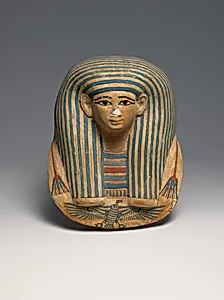
Medium
Cartonnage, paint
Dimensions
h. 15 cm (5 7/8 in); w. 12.5 cm (4 15/16 in)
Classification
Mask, Canopic bundle, miniature
Period
New Kingdom
Department
Egyptian Art
Museum
Metropolitan Museum of Art, New York, NY
Credit
Theodore M. Davis Collection, Bequest of Theodore M. Davis, 1915
Accession Number
30.8.231
Rights
Public Domain
Tags
Art Historical Context
This delicate miniature mask, crafted around 1427–1400 B.C. during Egypt's New Kingdom (Dynasty 18), once adorned a canopic bundle—a protective package for the mummified internal organs of the deceased. just 15 cm tall, it exemplifies the era's profound focus on the afterlife, when elaborate burial rituals ensured the soul's eternal journey. Produced by an unknown artist, such masks humanized and safeguarded visceral remains, mirroring the idealized features seen on full-sized mummy masks. Made of cartonnage—a lightweight medium of glued linen or papyrus layers coated in plaster and vividly painted—this artifact highlights innovative Egyptian techniques. The paint, likely in bold mineral-based hues of blue, red, and gold, would have depicted divine traits, invoking gods like Anubis or the four sons of Horus who guarded the organs. Its small scale suggests it served elite burials, reflecting the opulence of pharaohs like Thutmose III. Housed in the Metropolitan Museum of Art's Egyptian Art Department (Theodore M. Davis Collection, 1915), this mask offers a window into Dynasty 18's artistic mastery, blending piety, craftsmanship, and belief in immortality. A poignant reminder of ancient ingenuity!