
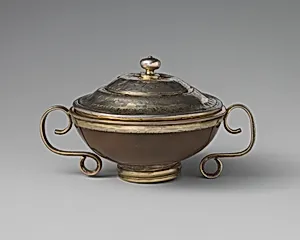
Miniature porringer
late 17th–early 18th century
Medium
Silver-gilt, agate
Dimensions
1 3/4 × 2 1/4 in. (4.4 × 5.7 cm)
Classification
Metalwork-Silver-Miniature
Culture
German
Department
European Sculpture and Decorative Arts
Museum
Metropolitan Museum of Art, New York, NY
Credit
The Joseph M. and Aimee Loeb May Collection, 1963
Accession Number
63.53.221a, b
Rights
Public Domain
Art Historical Context
This exquisite **Miniature porringer**, by the German silvers I.S. in the 17th to early 18th century exemplifies the pinnacle of Baroque-era metalwork. Measuring just 1 3/4 × 2 1/4 inches (4.4 × 5.7 cm), this silver-gilt vessel—adorned with agateserved not as everyday tableware but as a collector's treasure. Porringers were small bowls for porridge or children's meals, but miniatures like this were prized for display in cabinets of curiosities, showcasing virtuoso craftsmanship on an intimate scale. The use of silver-gilt, where a thin layer of gold is fire-gilt onto silver, lent a luxurious sheen and durability, while the agate—a colorful, polished semi-precious stone—added natural elegance, likely forming the handle or rim accent. German decorative arts from this period thrived amid princely patronage, blending technical precision with opulent materials to reflect wealth and status. Such miniatures demanded exceptional skill, as artisans miniaturized complex chasing and engraving techniques without losing detail. Now in the Metropolitan Museum of Art's European Sculpture and Decorative Arts collection, gifted through The Joseph M. and Aimee Loeb May Collection in 1963, this porringer invites us to marvel at the era's fusion of functionality, artistry, and whimsy— a delicate window into 18th-century collecting culture.