
Miniature Tabard
Unknown Artist
1600–1700
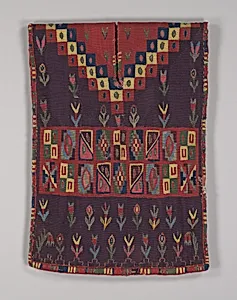
Medium
Cotton, camelid hair, silk, metal
Dimensions
H. 14 1/2 x W. 11 in. (36.8 x 27.9 cm)
Classification
Textiles-Woven
Culture
Inca and Spanish
Department
Arts of Africa, Oceania, and the Americas
Museum
Metropolitan Museum of Art, New York, NY
Credit
Gift of Penny Righthand, in memory of Richard I. Levine, 2007
Accession Number
2007.470
Rights
Public Domain
Art Historical Context
This exquisite *Miniature Tabard*, between 1600 and 1700, exemplifies the vibrant textile traditions of the Inca and early Spanish colonial cultures in the Andes. Measuring just 14½ by 11 inches, sleeveless tunic—worn historically by Inca elites over clothing or armor—stands as a delicate model, possibly created for ceremonial, educational, or display purposes. small scale highlights the extraordinary precision of Andean weavers, who produced full-sized garments renowned for their symbolic patterns and social status. Woven from cotton, camelid hair (such as alpaca or vicuña for its luxurious softness), silk, and metal threads, the tabard blends indigenous materials with Spanish introductions like silk, reflecting cultural syncretism during colonial Peru. Inca weavers mastered backstrap looms to create intricate supplementary warp patterns, often encoding cosmology, ancestry, and power. The addition of metal—perhaps silver or gold filaments—suggests elite craftsmanship influenced by European tastes. Housed in the Metropolitan Museum of Art's Arts of Africa, Oceania, and the Americas department, this gift from Penny Righthand honors the fusion of Inca mastery and colonial innovation, offering a window into how textiles bridged worlds in the 17th century. Visitors, imagine draping a noble in miniature splendor!