
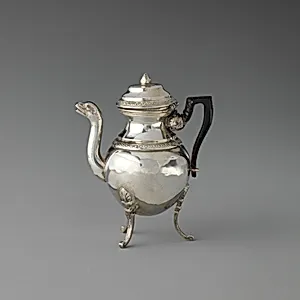
Miniature teapot
Unknown Artist
1838–?50
Medium
Silver, wood
Dimensions
Height: 2 1/8 in. (5.4 cm)
Classification
Metalwork-Silver-Miniature
Culture
French
Department
European Sculpture and Decorative Arts
Museum
Metropolitan Museum of Art, New York, NY
Credit
The Joseph M. and Aimee Loeb May Collection, 1963
Accession Number
63.53.39
Rights
Public Domain
Tags
Art Historical Context
Nestled in the Metropolitan Museum of Art's European Sculpture and Decorative collection, this exquisite miniature teapot, crafted in France between 1838 and 1850, exemplifies the pinnacle of 19th-century silversmithing. Standing just 2 1/8 inches (5.4 cm) tall, it is fashioned from gleaming silver with wooden accents, likely the handle or spout fittings, highlighting the meticulous craftsmanship required for such diminutive scales. The unknown artist's work, part of The Joseph M. and Aimee Loeb May Collection (1963), features delicate bird motifs—perhaps perched on the lid or body—evoking the Romantic era's fascination with nature and whimsy. Miniature silverware like this teapot was a luxury novelty during France's July Monarchy, when a burgeoning middle class embraced ornate domestic objects. These tiny treasures often adorned dollhouses for affluent children or served as collector's items for adults, showcasing virtuoso techniques such as chasing, repoussé, and precise soldering to mimic full-sized teapots in every detail. The silver's luster and the wood's warmth create a playful contrast, underscoring the era's blend of functionality and fantasy. Culturally, it reflects tea-drinking rituals popular among the French elite, symbolizing refinement and leisure. Though small, this teapot invites us to marvel at the skill that compressed grandeur into pocket-sized elegance, a testament to the artistry of everyday luxury.