
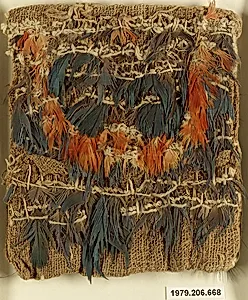
Miniature Tunic
Unknown Artist
12th–13th century
Medium
Cotton, feathers
Dimensions
H. 5 1/2 x W. 6 3/8 in. (14 x 16.2 cm)
Classification
Textiles-Featherwork
Culture
Ica
Department
Arts of Africa, Oceania, and the Americas
Museum
Metropolitan Museum of Art, New York, NY
Credit
The Michael C. Rockefeller Memorial Collection, Bequest of Nelson A. Rockefeller, 1979
Accession Number
1979.206.668
Rights
Public Domain
Art Historical Context
This exquisite **Miniature Tunic** the Ica culture of Peru's south coast, dating to the 12th–13th century, showcases the mastery of pre-Columbian featherwork. Crafted from cotton fabric adorned with vibrant feathers, it measures just 5½ x 6⅜ inches (14 x16.2 cm), it served as a votive offering, doll garment, or ceremonial model rather wearable attire. The Ica people, flourishing along the arid coastal valleys before Inca conquest, were renowned for their textile innovations, blending weaving with natural materials to create luminous, symbolic objects. The technique of featherwork—likely involving dyeing, trimming, and meticulously gluing feathers onto cotton—highlights the artisans' skill in capturing iridescent colors and textures from local bird species. This medium was prized in Andean societies for its association with divinity, wealth, and spiritual power, evoking the plumage of tropical birds sacred to indigenous beliefs. Though the artist remains unknown, the tunic's precision reflects a communal craft tradition passed down through generations. Today, this rare survivor graces the Metropolitan Museum of Art's Arts of Africa, Oceania, and the Americas collection, thanks to The Michael C. Rockefeller Memorial Collection (1979). It invites us to marvel at Ica ingenuity, bridging ancient rituals with timeless beauty.