
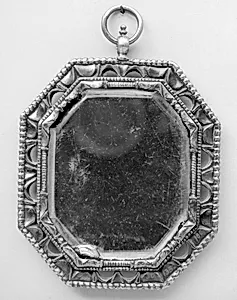
Mirror
Unknown Artist
early 17th century
Medium
Silver, silver gilt, glass
Dimensions
Overall: 3 1/4 × 2 1/2 in. (8.3 × 6.4 cm)
Classification
Metalwork-Silver In Combination
Culture
possibly Italian
Department
European Sculpture and Decorative Arts
Museum
Metropolitan Museum of Art, New York, NY
Credit
Gift of Mrs. Edward S. Harkness, 1930
Accession Number
30.135.100
Rights
Public Domain
Art Historical Context
This delicate pocket mirror, crafted in the early 17 century, exemplifies the exquisite metalwork of Europe's Baroque era. Possibly of Italian origin, it measures just 3¼ × 2½ inches, making it a perfect personal accessory for the elite—tucked into a pocket or purse for private moments of vanity. The frame combines polished silver with silver gilt, a luxurious technique where a thin layer of gold is over silver for a radiant, enduring shine that mimicked more precious metals while remaining practical. Mirrors like this were marvels of their time, blending functionality with artistry in the tradition of European decorative arts. The glass backing, a technological achievement from Venice's renowned glassmakers, reflected the era's fascination with illusion and self-reflection amid opulent courts. As a piece of "Metalwork-Silver In Combination," it highlights skilled chasing and gilding techniques that elevated everyday objects into status symbols. Today, this charming artifact graces the Metropolitan Museum of Art's European Sculpture and Decorative Arts collection, a generous gift from Mrs. Edward S. Harkness in 1930. Gaze into it, and you'll catch a glimpse of 17th-century refinement!