
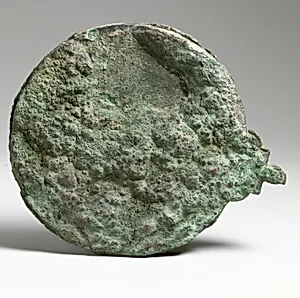
Mirror
Unknown Artist
6th century BCE
Medium
Bronze
Dimensions
Other: 5 7/8in. (14.9cm)
Classification
Bronzes
Culture
Greek, Cypriot
Department
Greek and Roman Art
Museum
Metropolitan Museum of Art, New York, NY
Credit
The Cesnola Collection, Purchased by subscription, 1874–76
Accession Number
74.51.5431
Rights
Public Domain
Tags
Art Historical Context
This exquisite bronze mirror, crafted by an unknown Cypriot Greek artisan around the 6th century, offers a glimpse into the daily luxuries of the ancient Mediterranean world. Measuring just 5 7/8 inches (14.9 cm), its compact size suggests it was a personal grooming tool, likely held in the hand for private use by women in elite households. As part of the Archaic period, when Cyprus bridged Greek, Phoenician, and Eastern influences, such mirrors were symbols of refinement and beauty. Bronze, a prized alloy of copper and tin, was cast using sophisticated lost-wax techniques, allowing for smooth, reflective surfaces that far surpassed polished stone alternatives. These mirrors weren't mere utilities; they embodied cultural ideals of vanity and adornment, often appearing in tombs or sanctuaries as offerings to deities like Aphrodite, goddess of love and beauty. Cypriot bronzes like this one highlight the island's role as a vibrant crossroads of trade and artistry. Housed in the Metropolitan Museum of Art's Greek and Roman Art department from the Cesnola Collection—assembled through 19th-century excavations—this mirror connects us to the tactile elegance of antiquity, reminding visitors how everyday objects preserved shimmering stories of the past.