
Mirror
Unknown Artist
12th century
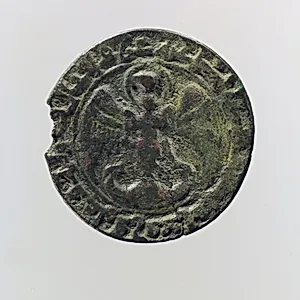
Medium
Bronze; cast
Dimensions
D. 3/16 in. (0.5 cm) Diam. 2 1/2 in. (6.4 cm) Wt. 1.9 oz. (53.9 g)
Classification
Metal
Department
Islamic Art
Museum
Metropolitan Museum of Art, New York, NY
Credit
Gift of Dr. Maurice S. Dimand, in memory of his wife, Avis, 1976
Accession Number
1976.158.2
Rights
Public Domain
Tags
Art Historical Context
This exquisite 12th-century bronze, cast by an unknown artisan, offers a glimpse into the refined metalworking traditions of the Islamic world. just 2½ inches in diameter and weighing under 2 ounces, its compact size suggests it was a portable personal item, likely carried by travelers, merchants, or elites for grooming, divination, or as a symbol of vanity and introspection. Housed the Metropolitan Museum of Art's Islamic Department, it exemplifies the era's mastery of bronze casting—a technique involving intricate molds that allowed for smooth, reflective surfaces durable enough for daily use. Bronze mirrors like this one were cultural treasures in medieval Islamic societies, from Persia to the Levant, where metalwork flourished amid thriving trade routes. The casting process highlights advanced metallurgical skills, producing a highly polished, mirror-like finish that captured light beautifully without glass, which was rarer then. Such objects often blended utility with artistry, reflecting broader themes of beauty and self-reflection in Islamic poetry and daily life. Gifted to the Met in 1976 by Dr. Maurice S. Dimand in memory of his wife, Avis, this delicate artifact invites us to ponder the intimate routines of people long ago, bridging centuries through its timeless gleam.