
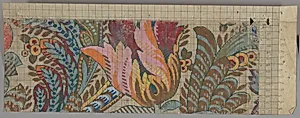
Mise-en-carte for Textile, No. 8359
January 24, 1918
Classification
textile designs
Department
Smithsonian Collection
Museum
Smithsonian American Art Museum
Credit
Gift of Orinoka Mills
Accession Number
1971-57-1-c
Rights
Public Domain
About this artwork
Research in Progress
Art Historical Context
**Mise-en-carte for Textile, No. 8359** by Robert M. Davidson, dated January 24, 1918, offers a fascinating glimpse into early 20th-century American textile design. A *mise-en-carte*—French for "layout on card"—is a precise technical drawing used as a blueprint for Jacquard looms, guiding the intricate threading of warp yarns to create complex woven patterns. This cataloged design, No. 8359, exemplifies the meticulous planning behind industrial textile production, bridging artistry and engineering at a time when America's mills were powering a booming economy. Created amid World War I, when textiles were vital for uniforms, bandages, and everyday goods, Davidson's work reflects the era's emphasis on efficiency and innovation. Donated by Orinoka Mills—a prominent Pennsylvania textile manufacturer—this piece entered the Smithsonian American Art Museum's collection, preserving a slice of industrial heritage. Though research continues, it highlights how designers like Davidson translated creative visions into repeatable patterns, fueling mass production. Today, this artifact invites us to appreciate the hidden craft behind familiar fabrics, reminding visitors of the skilled hands that shaped modern design. Part of the museum's textile designs classification, it underscores the Smithsonian's commitment to documenting America's graphic arts legacy.