
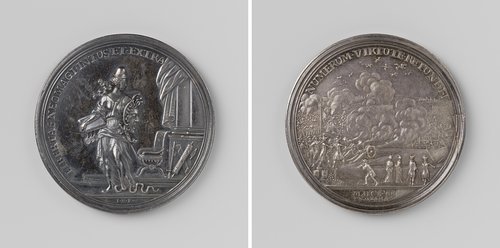
Mislukte aanslag van de Fransen op Nijmegen
1702
Medium
striking (metalworking)
Dimensions
4.4; 373
Rights
Public Domain
About this artwork
diameter 4.4 cm x weight 373 gr
Art Historical Context
Behold the intricate medal *Mislukte aanslag de Fransen op Nijmegen (Failed French Attack on Nijmegen), crafted Dutch medalist Jan Boskam in 1702. This small yet weighty artifact commemorates a pivotal moment during the War of the Succession, when French forces under Louis XIV attempted to besiege the fortified Dutch city of Nijmegen but were repelled by Allied defenders. Such medals served as triumphant propaganda, celebrating military victories and bolstering national pride in an era of frequent European conflicts. Struck using the metalworking technique of die-stamping, Boskam's work exemplifies the precision of early 18th-century numismatic art. A metal blank is hammered between engraved dies to create high-relief designs on both obverse and reverse, capturing dramatic scenes of the failed assault with remarkable detail. Medals like this were prized for their portability, functioning as wearable history—often distributed to soldiers, officials, or collectors to immortalize events. Measuring just 4.4 cm in diameter but weighing a substantial 373 grams, this piece hints at its use of dense, valuable metal, likely silver, underscoring its status as a luxury commemorative. In Dutch Golden Age culture, such objects blended artistry with patriotism, offering visitors a tangible link to the resilience of Nijmegen's defenders.