
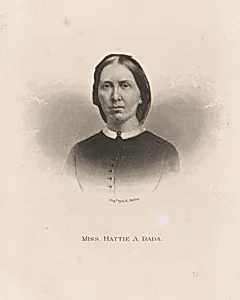
Miss Hattie A. Dada
Medium
Classification
Department
Smithsonian Collection
Museum
Smithsonian American Art Museum
Credit
National Portrait Gallery, Smithsonian Institution; gift in honor of Mayme Burrill, R.N. and Mary Patricia Des Roches, R.N.
Accession Number
NPG.2021.23
Rights
Public Domain
Tags
About this artwork
Born Hannibal, New York
Art Historical Context
"Miss Hattie A. Dada" is a captivating portrait print created around 1867 by Alexander Hay, a renowned Scottish-born engraver active in America (1822–1895). Ritchie specialized in finely detailed reproductive prints, often capturing the likenesses of prominent figures through meticulous line engraving techniques. This, housed in the Smithsonian American Art Museum's collection, depicts Harriet A. Dada—born in Hannibal, New—as a poised young woman, her elegant features highlighted by notable jewelry, including a brooch that draws the eye to her refined attire and demeanor. As a print from the post-Civil War era, the artwork reflects the growing popularity of portraiture in 19th-century America, where engravings like Ritchie's made celebrity and everyday notables accessible to a wider audience beyond oil paintings. The medium's precision allowed for subtle textures in fabrics and adornments, emphasizing social status and femininity. Donated to the National Portrait Gallery in honor of nurses Mayme Burrill and Mary Patricia Des Roches, it underscores themes of recognition for women's contributions during turbulent times. Visitors will appreciate how this piece preserves a slice of personal history, inviting us to ponder Dada's story amid the era's social shifts. A testament to Ritchie's skill, it blends artistry with cultural snapshot.