
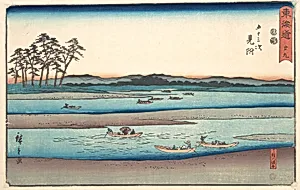
東海道五十三次 見附 天竜川渡舟|Mitsuke
ca. 1840
Medium
Woodblock print; ink and color on paper
Dimensions
Overall: 8 3/4 x 13 3/4in. (22.2 x 34.9cm)
Classification
Prints
Culture & Period
Japan · Edo period (1615–1868)
Department
Asian Art
Museum
Metropolitan Museum of Art, New York, NY
Credit
The Francis Lathrop Collection, Purchase, Frederick C. Hewitt Fund, 1911
Accession Number
JP779
Rights
Public Domain
Tags
Art Historical Context
In Utagawa Hiroshige *Mitsuke: Tenryū River Ferry* (ca. 1840), part of the celebrated *Tōkaidō Gojūsan-tsugi* series, visitors glimpse a dramatic moment along Japan's historic coastal highway from Edo (modern Tokyo) to Kyoto. This woodblock print captures the bustling Tenryū River crossing at the Mitsuke station during the Edo period (1615–1868), where travelers navigated the wide, treacherous waters by ferry. Hiroshige, a master of the ukiyo-e tradition, masterfully renders the scene with boats laden with passengers, distant mountains shrouded in mist, and a vast, moody sky, evoking the perils and poetry of pilgrimage. Hiroshige's genius lies in his innovative use of color gradients and atmospheric perspective, achieved through the collaborative woodblock process—designers, carvers, printers, and publishers working in harmony. Ink and color on paper create vivid blues and greens that convey the river's power and the fragility of human endeavor. Measuring just 8¾ × 13¾ inches, these affordable prints brought landscape beauty to everyday viewers, fueling a travel craze. This Edo-era icon, now in the Metropolitan Museum of Art's Asian Art collection, underscores ukiyo-e's cultural role in democratizing art and inspiring global artists like Van Gogh and Monet. A testament to Japan's wanderlust spirit!
About the Artist
Utagawa Hiroshige · 1826–1869
Utagawa Hiroshige (1797–1858), born Andō Tokutarō, was the last great master of Japanese ukiyo-e woodblock printmaking and one of the most influential landscape artists in history. Born in Edo (modern Tokyo) into a low-ranking samurai family serving as fire wardens, Hiroshige transformed landscape printmaking into a poetic meditation on nature, weather, and everyday life. His revolutionary approac...