
東海道五十三次 宮|Miya
ca. 1838
Medium
Woodblock print; ink and color on paper
Dimensions
8 1/2 x 6 1/2 in. (21.6 x 16.5 cm)
Classification
Prints
Culture & Period
Japan · Edo period (1615–1868)
Department
Asian Art
Museum
Metropolitan Museum of Art, New York, NY
Credit
Rogers Fund, 1914
Accession Number
JP97
Rights
Public Domain
Tags
Art Historical Context
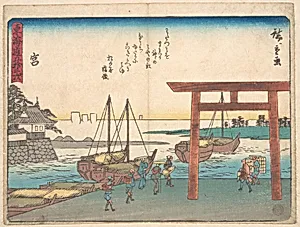
Utagawa Hiroshige's *Tōkaidō Gojūsan-tsugi: Miya* (ca. 1838) is a captivating woodblock print from his renowned series *The Fifty-three Stations of the Tōkaidō*. This intimate chuban-sized work (8½ × 6½ in.) depicts the bustling post station at Miya, the 47th stop along the historic coastal highway connecting Edo (modern Tokyo) to Kyoto. Vivid ink and color on paper bring to life gates, human figures, and boats dotting the scene, evoking the lively rhythm of travelers and merchants during Japan's Edo period (1615–1868). Hiroshige, a master of the ukiyo-e ("pictures of the floating world") tradition, revolutionized landscape printmaking with his atmospheric perspectives and subtle gradations of color, achieved through innovative techniques like *bokashi* (ink blending). Produced via a collaborative woodblock process—designing, carving, and printing by specialized artisans—these affordable prints democratized art, allowing commoners to experience Japan's scenic beauty amid strict travel restrictions under the shogunate. Culturally, the Tōkaidō series captured the era's wanderlust, blending everyday life with poetic vistas. Acquired through the Rogers Fund in 1914, this Metropolitan Museum of Art treasure offers a window into 19th-century Japan, where journeys like these symbolized both duty and delight.
About the Artist
Utagawa Hiroshige · 1826–1869
Utagawa Hiroshige (1797–1858), born Andō Tokutarō, was the last great master of Japanese ukiyo-e woodblock printmaking and one of the most influential landscape artists in history. Born in Edo (modern Tokyo) into a low-ranking samurai family serving as fire wardens, Hiroshige transformed landscape printmaking into a poetic meditation on nature, weather, and everyday life. His revolutionary approac...