
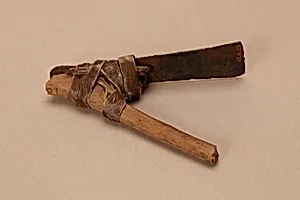
Model adze
Unknown Artist
ca. 1981–1802 B.C.
Medium
Copper, wood
Dimensions
7.7 cm (3 1/16 in)
Classification
Model adze
Period
Middle Kingdom
Department
Egyptian Art
Museum
Metropolitan Museum of Art, New York, NY
Credit
Gift of Edward S. Harkness, 1917
Accession Number
17.9.23
Rights
Public Domain
Art Historical Context
This delicate **Model Adze**, crafted around 1981–1802 B.C. during Egypt's Middle Kingdom (Dynasty 12), the ancient Egyptians' profound belief in provisioning the afterlife. Standing just7.7 cm tall this miniature tool—featuring a polished copper blade hafted to a wooden handle likely placed in a tomb as a symbolic offering. Real adzes were essential woodworking tools for carving statues, boats, and coffins, so models like this ensured the deceased could continue such labors eternally, reflecting the era's renewed focus on order, prosperity, and meticulous funerary practices after turbulent times. The object's construction highlights skilled artisanship: the copper, sourced from Sinai mines and hammered into a sharp, functional form, contrasts beautifully with the smooth wooden haft, secured by ancient binding techniques (now preserved). Such models proliferated in Dynasty 12 elite tombs, showcasing a shift toward realism and everyday utility in art, bridging the practical and spiritual worlds. A generous gift from Edward S. Harkness in 1917, this piece now graces the Metropolitan Museum of Art's Egyptian Art collection, inviting us to ponder how a tiny tool encapsulates an entire civilization's hopes for immortality.