
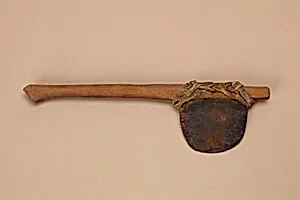
Model ax
Unknown Artist
ca. 1981–1802 B.C.
Medium
Copper, wood, animal hide
Dimensions
l. 5.7 cm (2 1/4 in)
Classification
Model ax
Period
Middle Kingdom
Department
Egyptian Art
Museum
Metropolitan Museum of Art, New York, NY
Credit
Gift of Edward S. Harkness, 1917
Accession Number
17.9.16
Rights
Public Domain
Art Historical Context
This delicate model ax, crafted around 1981–1802 B.C. during Egypt's Middle Kingdom (Dynasty 12), exemplifies the era's masterful miniature tomb offerings. Standing just 5.7 cm long, it features a copper blade, wooden handle, and animal hide bindings—materials chosen for their durability and symbolic resonance. These models were not mere toys but vital funerary items, buried with the deceased to ensure they could wield tools and weapons in the afterlife, reflecting the Egyptians' profound belief in eternal provision. In the Middle Kingdom, a golden age of stability and artistic refinement following turbulent times, such models proliferated in elite tombs. Axes symbolized power, protection, and labor, evoking both warfare and craftsmanship. The realistic construction techniques—hammered copper for the sharp edge, tightly wrapped hide for grip—highlight artisans' skill in scaling down functional objects while preserving their essence. This piece, a gift to the Metropolitan Museum of Art in 1917, offers a window into daily life and spiritual rituals of ancient Egypt. Visitors, picture this tiny ax equipping a noble for eternity— a testament to how Middle Kingdom art blended utility, piety, and exquisite detail.