
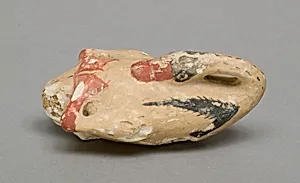
Model duck, trussed
Unknown Artist
ca. 1981–1640 B.C.
Medium
Wood covered with stucco
Classification
Model duck, trussed
Period
Middle Kingdom
Department
Egyptian Art
Museum
Metropolitan Museum of Art, New York, NY
Credit
Rogers Fund, 1912
Accession Number
12.182.78
Rights
Public Domain
Tags
Art Historical Context
Behold the *Model Duck, Trussed*, a charming yet poignant artifact from Egypt's Middle Kingdom (ca 1981–1640 B.C.), crafted duringasties 12–13. This small wooden figure, acquired by the Metropolitan Museum of Art through the Rogers Fund in 191, depicts a duck bound as if prepared for a feast—its wings tucked and legs tied in a realistic pose that captures everyday life with startling precision. In ancient Egyptian funerary practices, such model animals were vital tomb offerings, symbolizing eternal provisions for the deceased in the afterlife. Placed among boats, servants, and granaries, this trussed duck ensured a steady supply of poultry, reflecting the Middle Kingdom's belief in *ka*—the life force sustained by food. Artisans carved the body from wood, then coated it with stucco, a plaster-like layer that allowed for smooth detailing and vibrant painting (though colors have faded over millennia). This technique highlights the era's masterful blend of functionality and artistry, bridging the mundane and the mystical. Today, in the Met's Egyptian Art galleries, this unassuming duck invites us to ponder the ancient Egyptians' ingenuity: turning a simple meal into a promise of immortality. A delightful window into their world!