
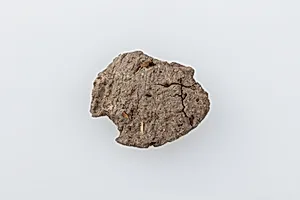
Model food offering, cake
Unknown Artist
ca. 1981–1975 B.C.
Medium
Mud
Dimensions
L. 4.7 × Th. .6 cm (1 7/8 in. × 1/4 in.)
Classification
Model food offering, loaf of bread
Period
Middle Kingdom
Department
Egyptian Art
Museum
Metropolitan Museum of Art, New York, NY
Credit
Rogers Fund and Edward S. Harkness Gift, 1920
Accession Number
20.3.264
Rights
Public Domain
Art Historical Context
This delicate model of a cake, crafted from mud during Egypt's Middle Kingdom (Dyn 12, ca. 1981–1975 B.C.), offers a glimpse into ancient funerary rituals. Measuring just 4.7 cm long and 0.6 cm thick, it served as a symbolic food offering placed in tombs to nourish the deceased in the afterlife. Egyptians believed that such models, alongside shabtis and other provisions, ensured eternal sustenance when real food decayed. Made from simple mud—likely Nile silt shaped and sun-dried—these miniature replicas highlight the ingenuity of Middle Kingdom artisans. This period marked a cultural renaissance, with refined tomb goods emphasizing piety and prosperity. Flat and disk-like, evoking a stylized bread or pastry, the "cake" reflects everyday staples transformed into sacred symbols. Today, housed in the Metropolitan Museum of Art's Egyptian Art department (Rogers Fund and Edward S. Harkness Gift, 1920), it reminds us of ancient Egyptians' practical optimism: even in death, life's simple pleasures endured. A tiny testament to their enduring faith in immortality.