
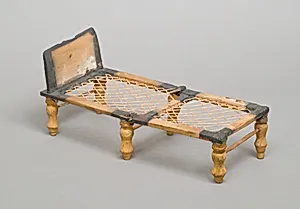
Model of a Folding Bed
Unknown Artist
ca. 1550–1295 B.C.
Medium
Wood, modern cord
Dimensions
height at foot end 13 cm (5 1/8 in); l. 30.8 cm (12 1/8 in)
Classification
Model folding bed
Period
New Kingdom
Department
Egyptian Art
Museum
Metropolitan Museum of Art, New York, NY
Credit
Rogers Fund, 1920
Accession Number
20.2.13a–c
Rights
Public Domain
Tags
Art Historical Context
This exquisite model of a folding bed, crafted around 1550–1295 B.C. during Egypt's New Kingdom (Dyn 18), offers a fascinating glimpse into ancient daily life. Measuring just 30.8 cm long and 13 cm high at the end, this wooden miniature replicates a portable bed likely used by elites for travel, military campaigns, or temporary rests. Acquired by the Metropolitan Museum of Art through Rogers Fund in 192, it exemplifies the precision of Egyptian woodworking from a golden age of pharaonic power, when rulers like Hatshepsut and Tutankhamun expanded the empire. In ancient Egyptian tombs, such models served a profound funerary purpose: provisioning the deceased with essentials for the afterlife. Folded for compactness, the bed's hinged frame and slatted platform highlight innovative design for mobility, while the modern cord replaces decayed original bindings, preserving its form. These artifacts reveal a culture obsessed with eternity, where even furniture was miniaturized to ensure comfort beyond death. Though the artist remains unknown, the model's clean lines and functional elegance underscore the New Kingdom's mastery of carpentry, blending utility with symbolic ritual. A true treasure for visitors, it invites us to imagine the nomads and nobles who once reclined upon its full-scale counterparts. (198 words)