
Model of Tiger
Unknown Artist
Medium
Stoneware
Dimensions
H. 2 3/4 in. (7 cm); L. 5 3/16 in. (13.2 cm)
Classification
Ceramics
Culture & Period
China · Yuan dynasty (1271–1368)
Department
Asian Art
Museum
Metropolitan Museum of Art, New York, NY
Credit
Charlotte C. and John C. Weber Collection, Gift of Charlotte C. and John C. Weber, 1994
Accession Number
1994.605.80
Rights
Public Domain
Art Historical Context
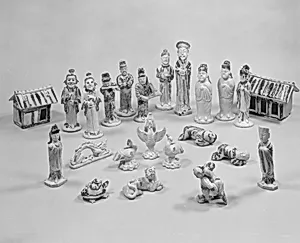
This petite stoneware model of a tiger, crafted during China's Yuan dynasty (12711368), captures the grace of one of the nation's most revered animals. Measuring just 2¾ inches high and over 5 inches long, diminutive sculpture exemplifies the era's mastery of ceramics, where stoneware—a durable, high-fired clay—was prized for its resilience and subtle glaze effects. Tigers held profound symbolic power in Chinese culture, embodying strength, protection, and imperial authority, often warding off evil spirits or serving as talismans. Produced under the Mongol-ruled Yuan court, which blended Chinese traditions with Central Asian influences, such models likely functioned as toys, decorative ornaments, or ritual objects. The unknown artisan's skill shines in the tiger's dynamic pose—poised to pounce—rendered with incised details for fur, whiskers, and muscular form, highlighting the period's innovative ceramic techniques like mold-making and slip decoration. Now part of the Metropolitan Museum of Art's Asian Art collection, thanks to the Charlotte C. and John C. Weber Collection (1994 gift), this tiger invites visitors to ponder everyday artistry from a transformative dynasty, bridging the grandeur of imperial China with intimate, hand-held wonder.