
Mokugyo
Unknown Artist
19th century
Medium
Wood
Dimensions
H. 35.6 cm (14 in.), W. 30.5 cm (12 in.)
Classification
Idiophone-Struck-slit drum
Culture
Japanese
Department
Musical Instruments
Museum
Metropolitan Museum of Art, New York, NY
Credit
The Crosby Brown Collection of Musical Instruments, 1889
Accession Number
89.4.72
Rights
Public Domain
Art Historical Context
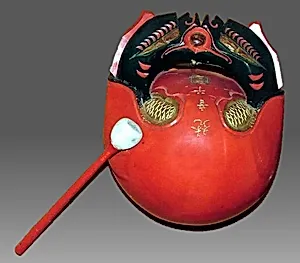
Nestled in the Metropolitan Museum of Art's Crosby Brown Collection of Musical Instruments this 19th-centuryMokugyo* is a captivating example of Japanese craftsmanship. Carved from wood and measuring 14 inches high by 12 inches wide, exemplifies the slit drum—a type of idiophone struck to produce resonant tones. Its fish-like form, evoking "mokugyo" or "wooden fish," both aesthetic simplicity and functional design, typical of Edo-period (1603–1868) artifacts transitioning into the Meiji era. In Japanese Buddhist rituals, the *mokugyo* plays a vital rhythmic role, marking time during sutra chanting and meditation. Struck with a mallet through its slit, it emits a deep, echoing sound symbolizing wakefulness and the transience of life—much like a fish that never sleeps. This instrument's portability and durability made it essential in temples and processions, bridging art, music, and spirituality. Though the artist remains unknown, the *mokugyo*'s smooth carving and natural wood grain highlight virtuoso woodworking techniques honed over centuries. Acquired in 1889, it offers visitors a tangible link to Japan's rich sonic traditions, inviting reflection on how everyday objects embody profound cultural narratives.