
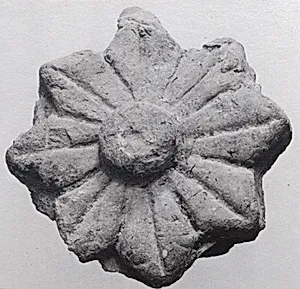
Molded Appliqé Ornament
Unknown Artist
ca. 2nd–5th century
Medium
Khotanese earthenware
Dimensions
H. 2 1/4 in. (5.7 cm); W. 2 1/4 in. (5.7 cm)
Classification
Sculpture
Culture
West China
Department
Asian Art
Museum
Metropolitan Museum of Art, New York, NY
Credit
Rogers Fund, 1930
Accession Number
30.32.32
Rights
Public Domain
Art Historical Context
This delicate **Molded Appliqué Or**, crafted from Khotanese earthenware around the 2nd–5th centuries CE, offers a glimpse into the vibrant artistry of ancient West China. Measuring just 2¼ inches (5.7 cm) in height and width, this small sculpture likely served as a decorative attachment for pottery vessels or architectural elements, showcasing the region's skilled ceramic traditions along the Silk Road trade routes. The technique of molding and appliqué—pressing a shaped clay form onto a surface before firing—highlights the ingenuity of Khotanese potters. Earthenware from Khotan, in modern-day Xinjiang, was prized for its fine texture and ability to capture intricate details, reflecting a fusion of local craftsmanship with influences from Central Asian commerce. Such ornaments often adorned everyday objects, blending utility with aesthetic appeal. Housed in the Metropolitan Museum of Art's Asian Art Department (Rogers Fund, 1930), this piece underscores the cultural crossroads of West China during a formative era of Buddhist expansion and cross-continental exchange. Though the artist remains unknown, its survival speaks to the enduring legacy of these humble yet masterful creations.