
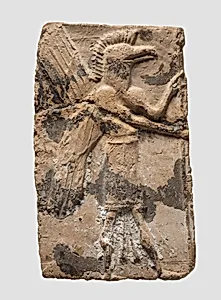
Molded plaque: eagle-headed apkallu
Unknown Artist
ca. 8th–7th century BCE
Medium
Ceramic, lime, bitumen
Dimensions
5.25 x 3.25 in. (13.34 x 8.26 cm)
Classification
Ceramics-Reliefs
Culture & Period
Assyrian · Neo-Assyrian
Department
Ancient Near Eastern Art
Museum
Metropolitan Museum of Art, New York, NY
Credit
Rogers Fund, 1951
Accession Number
51.72.6
Rights
Public Domain
Art Historical Context
Welcome to the Ancient Near Eastern galleries, where we encounter the "Molded plaque: eagle apkallu," a captivating ceramic relief from the Neo-Assyrian period (ca. 8th–7th century BCE).ed by an unknown Assyrian artist, this small plaque (5.25 x 3.25 in.) depicts a mythical apkallu—a wise, protective spirit with the head of an eagle, human body, and often bird-like talons. These beings were revered as sages who brought civilization and divine knowledge to humanity, serving as guardians in Assyrian lore. In the mighty Neo-Assyrian Empire, known for its grand palaces and imperial might, such plaques adorned doorways, thresholds, or sacred spaces to ward off evil forces. Made from molded ceramic combined with lime plaster and bitumen—a natural asphalt used for durability and waterproofing—this artwork exemplifies practical yet symbolic craftsmanship. The low-relief molding technique allowed for mass production of protective talismans, blending everyday utility with profound spiritual power. This piece, acquired through the Rogers Fund in 1951, offers a window into Assyrian beliefs in the supernatural, where hybrid creatures bridged the human and divine worlds. Marvel at how such a modest object encapsulated the empire's blend of artistry, religion, and power.