
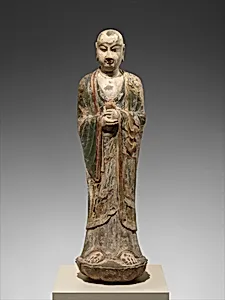
唐 彩繪石雕阿難陀像(石灰岩)|Monk, probably Ananda (Anantuo)
Unknown Artist
8th century
Medium
Limestone with pigment
Dimensions
H. (incl. stone dowel): 69 in. (175.3 cm)
Classification
Sculpture
Culture & Period
China · Tang dynasty (618–907)
Department
Asian Art
Museum
Metropolitan Museum of Art, New York, NY
Credit
Gift of A. W. Bahr, in memory of his wife, Helen Marion Bahr, 1952
Accession Number
52.41
Rights
Public Domain
Tags
Art Historical Context
This striking limestone sculpture depicts a serene monk, likely Anandaknown as Anantuo in), one of the Buddha's closest disciples and his cousin. Carved in 8th-century Tang dynasty China (618–907), a golden age for Buddhist art, the figure stands nearly life-size at 69 inches tall, exuding calm dignity with gently flowing robes and a contemplative gaze. Gifted to the Metropolitan Museum of Art 1952 by A. W. Bahr in memory his wife, it exemplifies the era's masterful stone carving from northern Chinese workshops. Tang sculptures like this one revolutionized Buddhist iconography, blending Indian spiritual influences with a distinctly Chinese realism—fuller figures, elegant proportions, and subtle emotional depth. Originally vibrantly painted with pigments (now faded), the polychrome technique brought divine figures to vivid life in temples and caves, making sacred stories accessible to worshippers. Ananda's portrayal highlights his role as the faithful attendant who memorized the Buddha's teachings, preserving sutras vital to Mahayana Buddhism's spread across Asia. As a testament to Tang cosmopolitanism, this unknown artist's work captures the dynasty's prosperity and religious fervor, inviting visitors to ponder the monk's quiet devotion amid an empire of innovation.