
Monkey Pendant
Unknown Artist
800–1500 CE
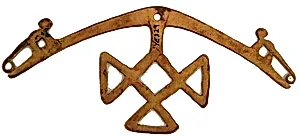
Medium
Gold
Dimensions
H. 2 1/4 × W. 5 in. (5.6 × 12.7 cm)
Classification
Metal-Ornaments
Culture
Carchi-Nariño, Capulí
Department
Arts of Africa, Oceania, and the Americas
Museum
Metropolitan Museum of Art, New York, NY
Credit
Gift of Mica Ertegün, 2008
Accession Number
2008.569.18
Rights
Public Domain
Tags
Art Historical Context
This exquisite **Monkey Pendant**, crafted by an unknown artist of the Capulí culture the Carchi-Nari region (modern-day Ecuador and Colombia), dates to 800–1500 CE.ed from gleaming gold, it measures a compact 2 1/4 × 5 inches (5.6 × 12.7 cm), perfect for wearing as personal adornment. Now housed in the Metropolitan Museum Art's Department of Arts of Africa,, and the Americas, was generously gifted by Mica Ertegün in2008. In pre-Columbian Andean societies like the Capulí, gold was revered not just for its luster but as a symbol of the sun's divine power and elite status. Artisans hammered and likely cast this delicate metal into intricate forms, showcasing advanced metallurgical skills. The monkey motif—energetic and expressive—may evoke the mischievous spirits of the tropical forests that bordered these highlands, hinting at the culture's deep ties to nature and mythology. This pendant offers a window into Capulí artistry, where everyday ornaments doubled as talismans. Its survival speaks to the enduring allure of these ancient goldworkers, whose techniques influenced later Andean traditions. Visitors, imagine it swaying against a noble's chest, catching the light of ancient rituals!