
Mordant
Unknown Artist
16th century
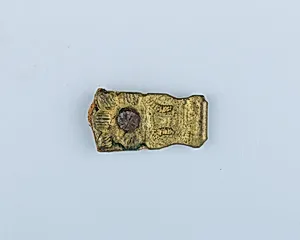
Medium
Brass
Dimensions
H. 1/2 in. (1.3 cm); W. 1 in. (2.5 cm); thickness 3/16 in. (0.5 cm); Wt. 0.1 oz. (3 g)
Classification
Miscellaneous-Buckles & Ornament
Culture
German
Department
Arms and Armor
Museum
Metropolitan Museum of Art, New York, NY
Credit
Gift of Bashford Dean, 1920
Accession Number
20.152.164
Rights
Public Domain
Art Historical Context
Nestled in the Metropolitan Museum of Art's Arms and Armor Department, this delicate brass *Mordant* from 16th-century Germany exemplifies the exquisite metalwork of the Renaissance era. Measuring just 1/2 inch high and 1 inch wide this lightweight ornament (weighing a mere 0.1 oz.) was likely a functional yet decorative buckle or strap fastener, used to secure belts, harnesses, or elements of armor. Crafted from brass—a durable, malleable alloy prized for its golden sheen and corrosion resistance—such pieces highlight the German artisans' skill in miniaturizing intricate designs for everyday military and civilian use. In the turbulent world of 16th-century Europe, German craftsmanship flourished amid the rise of professional armies like the Landsknechts, where even small fittings blended utility with ornamentation. Brass mordants like this one reflect a cultural emphasis on personalization and status, often embellished with subtle engravings or chasing techniques to catch the light during parades or battles. Though the artist remains unknown, the object's precision underscores the anonymous mastery of guild workshops. A generous gift from Bashford Dean in 1920, this tiny treasure invites visitors to appreciate how functional objects embodied artistic ingenuity, bridging the gap between warfare and wearable art in Renaissance Germany.