
Mordant
Unknown Artist
early 15th century
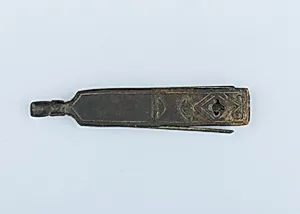
Medium
Bronze
Dimensions
H. 5/8 in. (1.6 cm); L. 2 15/16 in. (7.5 cm); thickness 1/8 in. (0.3 cm); Wt. 0.6 oz. (16 g)
Classification
Miscellaneous-Buckles & Ornament
Culture
French
Department
Arms and Armor
Museum
Metropolitan Museum of Art, New York, NY
Credit
Gift of Bashford Dean, 1920
Accession Number
20.152.86
Rights
Public Domain
Art Historical Context
Nestled in the Metropolitan Museum of Art's Arms and Armor collection, this delicate bronze *Mordant*—a French term for buckle or clasp—dates to the early 15th century. just 5/8 inch high and nearly 3 long, this tiny ornament (weighing a mere 0.6 ounces) exemplifies the exquisite metalwork of late medieval France. Likely used to secure belts, straps on armor, or clothing, its slender form and precise proportions highlight the era's demand for both functional and decorative accessories amid the Hundred Years' War. Crafted in bronze, a durable alloy favored for its casting qualities, the mordant reflects advanced lost-wax techniques common in Gothic workshops. French artisans of the time blended utility with subtle elegance, often adorning such items with simple, refined lines that echoed the intricate tracery of contemporary architecture and armor fittings. Though the artist remains unknown, this piece speaks to the skilled guild traditions of Paris or northern France, where everyday objects carried a quiet artistry. A generous gift from Bashford Dean in 1920, this mordant invites us to appreciate the unsung heroes of medieval life: the fasteners that held knights' gear—and society—together. Its survival offers a tangible glimpse into 15th-century craftsmanship and daily resilience.