
Mordant
Unknown Artist
15th–17th century
Medium
Bronze, patina
Dimensions
H. 15/16 in. (2.4 cm); W. 1 1/8 in. (2.9 cm); thickness 1/4 in. (0.6 cm); Wt. 0.2 oz. (5 g)
Classification
Miscellaneous-Buckles & Ornament
Culture
European
Department
Arms and Armor
Museum
Metropolitan Museum of Art, New York, NY
Credit
Bashford Dean Memorial Collection, Funds from various donors, 1929
Accession Number
29.158.828
Rights
Public Domain
Art Historical Context
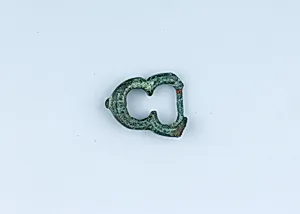
Nestled in the Metropolitan Museum of Art's Arms and Armor Department, this petite bronze *Mordant* from 15th–17th Europe exemplifies the exquisite craftsmanship of everyday military accessories. Measuring just under an inch tall and wide, with a featherlight weight of 0.2 ounces, this buckle or strap ornament—classified among miscellaneous fittings—was likely used to secure harnesses, belts, or armor components. Its compact form belies its practical ingenuity, designed for durability in the rigors of Renaissance and early modern warfare or equestrian pursuits. Crafted from bronze and adorned with a rich patina—a natural greenish oxidation that developed over centuries—the mordant highlights European metalworkers' mastery of casting and finishing techniques. Patina not only protected the metal but also lent an aesthetic depth, transforming functional items into subtle works of art. Such ornaments were ubiquitous among knights and soldiers, reflecting the period's blend of utility and subtle decoration amid the opulence of plate armor. Acquired through the Bashford Dean Memorial Collection in 1929, this unassuming piece offers a window into the unsung details of European martial culture, reminding us that even the smallest artifacts carry stories of innovation and endurance. Visitors, take a closer look—its modest scale invites appreciation for the artistry in the miniature.