
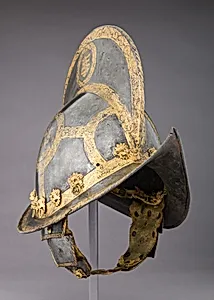
Morion for the Bodyguard of the Prince-Elector of Saxony
Unknown Artist
ca. 1600
Medium
Steel, gold, brass, leather, textile
Dimensions
H. 16 1/4 in. (41.3 cm); W. 14 7/8 in. (37.8 cm); D. 14 11/16 in. (37.3 cm); Wt. 4 lb. 8.6 oz. (2058.2 g)
Classification
Helmets
Culture
German, probably Nuremberg
Department
Arms and Armor
Museum
Metropolitan Museum of Art, New York, NY
Credit
Rogers Fund, 1904
Accession Number
04.3.225
Rights
Public Domain
Tags
Art Historical Context
Step into the world of Renaissance chivalry with this striking *Morion for the Bodyguard of the Prince-Elector of Saxony*, around 1600 in Germany, likely by Nuremberg's renowned armorers. The morion, a distinctive open-faced helmet with a wide, peaked brim, was a hallmark of 16th- and 17th-century infantry and elite guards. Worn by the personal protectors of Saxony's powerful Prince-Elector—rulers of one of the Holy Roman Empire key electorates—this helmet symbolized both martial prowess and noble allegiance during an era of religious wars and princely rivalries. Forged from steel for unyielding protection, it gleams with luxurious gold and brass inlays, accented by leather and textile linings for comfort. Measuring about 16 inches high and weighing over four pounds, its robust form balanced battlefield utility with opulent decoration, including the Prince-Elector's coat of arms—a testament to Nuremberg's mastery of embossing, gilding, and heraldic detailing. These techniques elevated armor from mere defense to status symbols for Europe's nobility. Acquired by The Metropolitan Museum of Art through the Rogers Fund in 1904, this helmet offers a tangible glimpse into the splendor of Electoral Saxony, where craftsmanship met courtly power. Imagine the clash of pikes and the gleam of gold under torchlight—history worn on the head!