
Mosland, Glo
n.d.
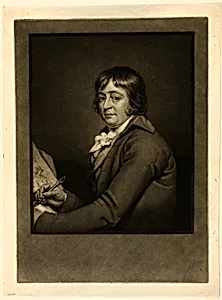
Medium
Mezzotint on paper
Dimensions
Image: 37.5 × 27.1 cm (14 13/16 × 10 11/16 in.); Plate: 37.7 × 27.5 cm (14 7/8 × 10 7/8 in.); Sheet: 41.6 × 30.8 cm (16 7/16 × 12 3/16 in.)
Classification
mezzotint
Department
Prints and Drawings
Museum
Art Institute of Chicago
Accession Number
89479
Rights
Public Domain
Art Historical Context
William Ward's *Mosland, Glo* (n.d.) is a striking example of early 19th-century British printmaking, housed in the Art Institute of Chicago's Prints and Drawings department. Ward (1766–1826), a leading engraver of his time, specialized in mezzotints that captured the dramatic lighting and texture reminiscent of oil paintings. This work, with its image size of 37.5 × 27.1 cm, exemplifies the intimacy of paper-based prints, which were affordable ways to bring high art into homes during the Regency era. Mezzotint, Ward's chosen medium, is a labor-intensive technique invented in the 17th century and perfected by British artists. The copper plate is first roughened with a rocker tool to hold deep black ink, then meticulously scraped and burnished to create highlights, yielding a velvety range from inky shadows to luminous tones. This method's painterly quality made it ideal for portraits and scenes, revolutionizing reproductive printmaking and influencing how images of celebrities, nobility, and everyday life circulated widely. Though the undated *Mosland, Glo* remains enigmatic—possibly a portrait or genre subject—its presence in a major collection underscores Ward's technical mastery and the mezzotint's role in democratizing art. Visitors will appreciate its subtle gradations, a testament to the engraver's skill in evoking emotion through tone alone.