
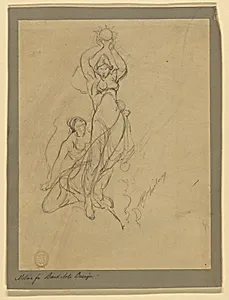
Motif for Bank Note Design
Classification
numismatics
Department
Smithsonian Collection
Museum
Smithsonian American Art Museum
Credit
Gift of Mrs. Walter Shirlaw
Accession Number
1912-16-128
Rights
Public Domain
About this artwork
Research in Progress
Art Historical Context
**Motif for Bank Note** *Walter Shirlaw (American, b. Scotland 1838–1909), ca. 1895* Walter Shirlaw, a-born American artist renowned for his intricate illustrations and engravings, created this *Motif for Bank Note Design* 1895. Trained in Europe and active in New York’s vibrant art scene, Shirlaw to magazines like *Harper’s Weekly* before turning his precision skills toward functional art. This work, classified under numismatics in the Smithsonian American Art Museum’s collection, represents a proposed decorative element for U.S. currency during the Gilded Age—a time of rapid economic growth, industrial expansion, and debates over monetary standards like gold versus silver. Bank note designs of the era demanded exceptional detail to deter counterfeiting, often featuring allegorical figures, intricate patterns, and vignettes symbolizing national values. Shirlaw’s motif likely exemplifies this, blending artistic flair with technical mastery suited for engraving. Though the medium remains unidentified amid ongoing research, its survival as a gift from Mrs. Walter Shirlaw highlights its personal and historical value, offering a glimpse into the artistry behind America’s paper money. Today, this piece invites visitors to appreciate how fine art intersected with everyday finance, bridging aesthetics and security in late 19th-century America. (198 words)