
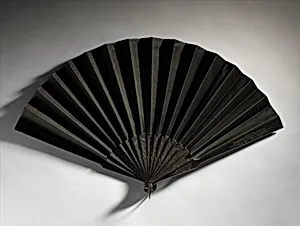
Mourning fan
Unknown Artist
1880–85
Medium
wood, silk
Classification
Mourning fan
Culture
American
Department
Costume Institute
Museum
Metropolitan Museum of Art, New York, NY
Credit
Brooklyn Museum Costume Collection at The Metropolitan Museum of Art, Gift of the Brooklyn Museum, 2009; Gift of Amelia Beard Hollenback, 1966
Accession Number
2009.300.5518
Rights
Public Domain
Art Historical Context
Step into the poignant world of Victorian mourning customs with the *Mourning Fan*, a delicate accessory crafted by an unknown American artist between 1880 and 1885. Made of wood and silk, this fan exemplifies the refined craftsmanship of 19th-century costume accessories. Its structure likely features a wooden frame supporting panels of fine silk, a medium choice that combined durability with the luxurious drape essential for personal adornments. Housed in the Metropolitan Museum of Art's Costume Institute, it originates from the Brooklyn Museum Costume Collection, gifted in 2009 from Amelia Beard Hollenback's 1966 donation. In late 19th-century America, mourning was a highly ritualized social practice influenced by Queen Victoria's prolonged grief after Prince Albert's death in 1861. Women adhered to strict stages of mourning—full, half, and second mourning—dictating black attire and accessories like this fan. Carried during funerals or visits, it served both practical and symbolic purposes, signaling respect while providing subtle ventilation in heavy mourning garb. This fan's survival highlights the cultural obsession with elaborate grief rituals, where even ephemeral items like fans became markers of status and sentimentality. As a testament to American fashion's alignment with European trends, it offers visitors a tactile glimpse into an era when personal loss was publicly performed with exquisite detail.