
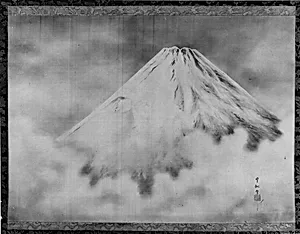
Mt. Fujiyama
19th century
Medium
Painting; color on silk
Dimensions
24 5/8 x 34 5/8 in. (62.5 x 87.9 cm)
Classification
Paintings
Culture
Japan
Department
Asian Art
Museum
Metropolitan Museum of Art, New York, NY
Credit
Gift of Susan Dwight Bliss, 1944
Accession Number
44.35.2
Rights
Public Domain
Tags
Art Historical Context
This 19th-century painting by Japanese artist Toyosei Kimigi captures the majestic form of Mt. Fujiyama, Japan’s most iconic volcano Rendered in delicate colors on silk, the work measures just over two feet high and exemplifies the refined tradition of Japanese painting on this luminous support, which allows pigments to glow with subtle depth and transparency. The composition highlights the mountain’s symmetrical peak, a subject long revered for its spiritual and aesthetic power. In Japanese culture, Mt. Fuji has symbolized national identity, purity, and the harmony between humans and nature for centuries. Artists often depicted it not merely as a geological feature but as a sacred presence, especially during the Edo and Meiji periods when travel and pilgrimage increased. Kimigi’s version invites viewers to appreciate the mountain’s timeless allure through careful brushwork and harmonious color. Housed in the Metropolitan Museum of Art’s Asian Art collection as a gift from Susan Dwight Bliss in 1944, the painting offers a window into Japan’s enduring artistic fascination with this natural wonder.