
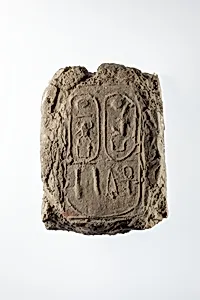
Mud Brick Stamped with the Throne Names <i>Aa-kheper-ka-re</i> (Thutmose I) and <i>Maat-ka-re</i> (Hatshepsut)
Unknown Artist
ca. 1479–1458 B.C.
Medium
Mud
Dimensions
L. 12.5 × W.10 × H.6.5 cm (4 15/16 × 3 15/16 × 2 9/16 in.)
Classification
Brick, Aakheperkare (Thutmose I), Maatkare (Hatshepsut)
Period
New Kingdom
Department
Egyptian Art
Museum
Metropolitan Museum of Art, New York, NY
Credit
Gift of James Douglas, 1890
Accession Number
90.6.42
Rights
Public Domain
Art Historical Context
This unassuming mud brick, stamped with the throne names *Aa-kheper-ka-re* (Thutmose I) and *Maat-ka-re* (Hatshepsut), offers a tangible link to one of ancient Egypt's most dynamic eras. Dating to around 1479–1458 B.C. during Dynasty 18 of the New Kingdom, it measures a modest 12.5 × 10 × 6.5 cm, yet it speaks volumes about royal authority and monumental construction. In the New Kingdom, pharaohs like Thutmose I—known for expanding Egypt's empire—and his daughter Hatshepsut, Egypt's powerful female king, commissioned vast temples and palaces. Mud bricks, molded from Nile silt and sun-dried, formed the backbone of these projects. Workers stamped the bricks with royal cartouches (oval name rings) before firing, ensuring every structure bore the pharaoh's eternal mark. This brick likely came from such a building, highlighting Hatshepsut's strategy to legitimize her rule by associating it with her father's legacy. Today, gifted to the Metropolitan Museum of Art in 1890 by James Douglas, this artifact reveals the everyday artistry of ancient engineering—simple, durable, and profoundly symbolic. It reminds us how even humble materials carried the weight of divine kingship in a civilization that built for eternity.