
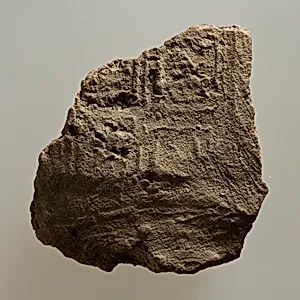
Mud jar sealing
Unknown Artist
ca. 3200–2650 B.C.
Medium
Clay, mud
Classification
Sealing, jar
Period
Predynastic, Late Naqada III–Early Dynastic Period
Department
Egyptian Art
Museum
Metropolitan Museum of Art, New York, NY
Credit
Gift of The Egyptian Research Account and British School of Archaeology in Egypt, 1912
Accession Number
12.187.38
Rights
Public Domain
Art Historical Context
Step into the dawn of Egyptian civilization with this modest yet momentous *Mud jar sealing*, crafted around 3200–2650 B.C. during the Predynastic Late Naqada III to Early Dynastic Period. from simple clay and mud, this artifact from the Metropolitan Museum of Art Egyptian Art collection served a practical purpose: sealing storage jars to secure precious commodities like grain, oil, or wine. Donated in 1912 by the Research Account and British School Archaeology in Egypt, it offers a tangible link to the Nile Valley's formative years, just before the unification of Upper and Lower Egypt under the first pharaohs. What makes this sealing remarkable is its role in the birth of Egyptian bureaucracy. Impressed with early seal designs—possibly geometric patterns or proto-hieroglyphs—the soft mud was pressed onto jar mouths and stamped with a cylinder or stamp seal while fresh, hardening to create an tamper-proof lid. This technique foreshadowed the sophisticated administrative systems of the Dynastic era, evidencing elite control over trade and resources in burgeoning proto-urban centers like Hierakonpolis and Abydos. Though unadorned by the grandeur of later pyramids or statues, this artifact whispers of innovation: the shift from nomadic to settled society, where sealing goods symbolized power and trust. A humble survivor from 5,000 years ago, it invites us to ponder how everyday objects laid the foundation for one of history's greatest civilizations.