
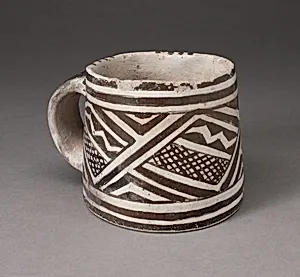
Mug with Interlocking Geometric Pattern with Zigzag Motifs and Crosshatching
1100–1275
Medium
Ceramic and pigment
Dimensions
11.4 × 9.5 cm (4 1/2 × 3 3/4 in.)
Classification
earthenware
Department
Arts of the Americas
Museum
Art Institute of Chicago
Accession Number
108753
Rights
Public Domain
Art Historical Context
This delicate earthenware mug, crafted by the Ancestral Pueblo (Anasazi) people between 1100 and 1275, exemplifies the sophisticated ceramic artistry of the American Southwest. Measuring just 11.4 × 9.5 cm, its compact form was likely used for everyday drinking or rituals, adorned with an intricate interlocking geometric pattern featuring zigzag motifs and fine crosshatching. Produced using fired clay and mineral pigments applied before firing, the mug's glossy black-on-white design reflects the Ancestral Pueblo's mastery of low-fire ceramics, a technique that allowed bold contrasts and enduring durability. The geometric motifs—repeating zigzags and crosshatched elements—are hallmarks of the Pueblo III period (ca. 1100–1300), when Ancestral Pueblo communities thrived in the Four Corners region of present-day Arizona, Utah, Colorado, and New Mexico. These patterns may symbolize natural forces like lightning or water, integral to their agrarian life amid arid landscapes. Such pottery, found in sites like Chaco Canyon and Mesa Verde, bridged utility and aesthetics, serving both practical needs and ceremonial purposes. Housed in the Art Institute of Chicago's Arts of the Americas department, this mug offers a window into a vibrant pre-Columbian culture that influenced modern Pueblo pottery traditions. Its precise execution invites visitors to appreciate how ancient hands transformed humble clay into timeless storytelling vessels.