
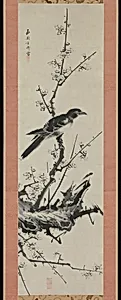
西園方済筆 梅に叭叭鳥図|Mynah Bird on Plum Branch
18th century
Medium
Hanging scroll; ink on paper
Dimensions
36 3/16 x 10 1/2 in. (91.9 x 26.7 cm)
Classification
Paintings
Culture & Period
Japan · Edo period (1615–1868)
Department
Asian Art
Museum
Metropolitan Museum of Art, New York, NY
Credit
The Harry G. C. Packard Collection of Asian Art, Gift of Harry G. C. Packard, and Purchase, Fletcher, Rogers, Harris Brisbane Dick, and Louis V. Bell Funds, Joseph Pulitzer Bequest, and The Annenberg Fund Inc. Gift, 1975
Accession Number
1975.268.87
Rights
Public Domain
Tags
Art Historical Context
In the serene elegance of Edo-period Japan (1615–8), Saien Hōsai's *Mynah Bird on Branch* (18th century) captures a moment of quiet harmony on a hanging scroll of ink on paper. Measuring 36 3/16 x 10 1/2 inches, this work from the Metropolitan Museum of Art's Asian Art collection depicts a mynah bird perched delicately on a plum branch adorned with budding flowers. The intimate vertical format invites contemplation, a hallmark of hanging scrolls traditionally unrolled for seasonal display in homes or temples. Plum blossoms, enduring the winter cold to bloom first in spring, symbolize resilience, purity, and renewal in East Asian culture—a motif rooted in Chinese literati painting that influenced Japanese artists like Hōsai. The mynah bird, known for its mimicry and chatter, adds a lively contrast, perhaps evoking themes of eloquence or the joys of nature. Rendered in subtle ink washes, Hōsai's technique emphasizes minimalist brushwork, with varying ink densities creating texture and depth, typical of Edo bird-and-flower paintings that blended Zen simplicity with scholarly refinement. Part of The Harry G. C. Packard Collection, this piece reflects the period's artistic flourishing amid urban prosperity, offering visitors a window into Japan's poetic appreciation for the natural world.