
Nakamura Rikō
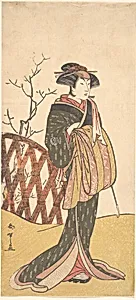
Medium
Woodblock print (nishiki-e); ink and color on paper
Dimensions
12 5/8 x 5 5/8 in. (32.1 x 14.3 cm)
Classification
Prints
Culture & Period
Japan · Edo period (1615–1868)
Department
Asian Art
Museum
Metropolitan Museum of Art, New York, NY
Credit
The Howard Mansfield Collection, Purchase, Rogers Fund, 1936
Accession Number
JP2696
Rights
Public Domain
Tags
Art Historical Context
This vibrant woodblock print, titledNakamura Rikō*, the renowned kabuki actor Nakamura Rikō II in a dynamic pose, created by Katsukawa Shunshō in1774 during Japan's Edo period (1615–1868). Shunshō, a leading figure in the ukiyo-e ("pictures of the floating world"), founded the Katsukawa school and in yakusha-e—portraits of theater performers brought the excitement of kabuki stages to everyday viewers. These prints were affordable art for the urban merchant class, reflecting Edo's booming entertainment culture centered in Tokyo (then Edo). The medium, nishiki-e or "brocade print," showcases Shunshō's mastery of intricate woodblock techniques, layering up to 10 colors from separate blocks for rich, lifelike hues on paper. Measuring just 12⅝ × 5⅝ inches, its narrow hosoban format was ideal for albums or fans, emphasizing the actor's expressive face, flowing robes, and dramatic gesture—hallmarks of onnagata roles, where male performers like Rikō specialized in female characters. Housed in the Metropolitan Museum of Art's Asian Art collection (from The Howard Mansfield Collection, 1936), this piece highlights kabuki's cultural dominance and ukiyo-e's role in democratizing celebrity imagery, influencing global printmaking. Visitors will appreciate how it freezes a fleeting performance into timeless beauty.
About the Artist
Katsukawa Shunshō 勝川春章 (Japanese) · 1726 –1792
Japanese, 1726–1792