
Napkin
Unknown Artist
1702–7
Medium
Linen
Dimensions
43 3/4 x 28 inches (111.1 x 71.1 cm)
Classification
Textiles-Woven
Culture
British or Flemish
Department
European Sculpture and Decorative Arts
Museum
Metropolitan Museum of Art, New York, NY
Credit
Gift of Mrs. James W. Pinchot, 1909
Accession Number
09.5
Rights
Public Domain
Tags
Art Historical Context
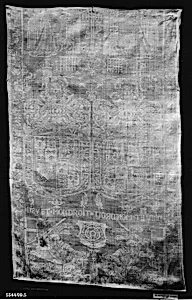
This exquisite linen napkin, crafted between 1702 and 1707, exemplifies the artistry of early 18th-century European textiles, likely from British or Flemish workshops renowned for their fine linen production. Measuring an impressive 43¾ x 28 inches, it far exceeds modern notions of a napkin, suggesting its use in grand households for formal dining or as a status symbol. Woven with intricate designs featuring a coat of arms and human figures, it showcases advanced damask or Jacquard-like weaving techniques, where patterns emerge through varying weave structures for a subtle, reversible elegance without added embroidery. In the Baroque era, such textiles were prized possessions, blending utility with heraldry to proclaim family lineage and prestige. Flemish weavers, in particular, dominated the linen trade, exporting luxury goods across Europe that graced noble tables. The unknown artist's mastery of figural motifs within armorial compositions highlights the cultural fusion of symbolism and craftsmanship, turning everyday linens into heirlooms. Today, housed in the Metropolitan Museum of Art's European Sculpture and Decorative Arts department (gift of Mrs. James W. Pinchot, 1909), this napkin offers a tactile glimpse into domestic opulence, reminding us how textiles wove stories of identity and refinement into the fabric of daily life.