
Napkin
Unknown Artist
1848–52
Medium
Linen
Dimensions
28 x 32 inches (71.1 x 81.3 cm)
Classification
Textiles-Woven
Culture
French
Department
European Sculpture and Decorative Arts
Museum
Metropolitan Museum of Art, New York, NY
Credit
Gift of Annie May Hegeman, 1932
Accession Number
32.91.1
Rights
Public Domain
Tags
Art Historical Context
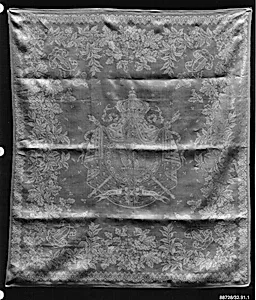
This exquisite linen napkin, woven in France between 1848 and 1852, exemplifies the refined artistry of mid-19th-century European. Measuring a generous 28 x inches, it belongs to the Metropolitan Museum of Art's European Sculpture and Decorative collection, gifted by Annie May Hegeman in1932. As a finely crafted piece of woven linen, it highlights the technical mastery of jacquard looms, which allowed intricate patterns to be produced efficiently during the Industrial Revolution's embrace of decorative household goods. The napkin's design features prominent motifs of eagles, flowers, and coats of arms, evoking French heraldic traditions. Eagles, symbols of imperial power and strength, were especially resonant in this era of political upheaval—the Revolution of 1848 and the rise of Napoleon III's Second Empire. Woven in a damask style, these elements create a reversible pattern with subtle sheen changes, blending utility with opulence for elite dining tables. Though by an unknown artist, this napkin underscores the cultural importance of textiles as status symbols, preserving national pride through everyday luxury. A testament to French craftsmanship, it invites us to appreciate how even humble linens carried profound symbolism.