
南宋 趙孟堅 水仙圖 卷|Narcissus
mid-13th century
Medium
Handscroll; ink on paper
Dimensions
Image: 13 1/16 in. × 12 ft. 3 1/4 in. (33.2 × 374 cm) Overall with mounting: 13 7/16 in. × 32 ft. 7 3/16 in. (34.1 × 993.6 cm)
Classification
Paintings
Culture & Period
China · Southern Song dynasty (1127–1279)
Department
Asian Art
Museum
Metropolitan Museum of Art, New York, NY
Credit
Ex coll.: C. C. Wang Family, Gift of The Dillon Fund, 1973
Accession Number
1973.120.4
Rights
Public Domain
Tags
Art Historical Context
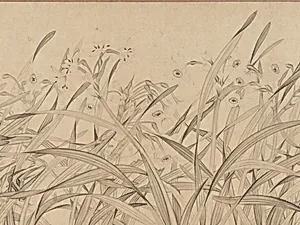
**Narcissus** by Zhao Mengjian, a master ink painter of the Southern Song dynasty (7–1279), the delicate beauty of blooming narcissus in a mid-13th-century hand. Created during a period when the Song court had relocated south after the Jurchen invasions, this work reflects the refined literati aesthetic of the era—emphasizing subtle elegance, introspection, and harmony with nature amid political upheaval. Zhao, renowned for his flower paintings, elevates the humble narcissus, a winter bloom symbolizing purity and renewal in Chinese culture, into a poetic meditation. Rendered in ink on paper, the monumental handscroll (image: 13 1/16 × 148 1/16 inches) unfolds like a private garden vista, designed for slow, contemplative viewing among scholars. Zhao's technique employs layered ink washes and textured strokes to suggest leaves and petals without rigid outlines, evoking the "boneless" (mogu) style that prioritizes fluidity and vitality over literal detail. This approach highlights the Southern Song innovation in monochrome painting, where minimalism conveys profound emotional depth. Housed in the Metropolitan Museum of Art's Asian Art Department (gift of The Dillon Fund, 1973), **Narcissus** exemplifies how Song artists transformed everyday flora into emblems of moral virtue and seasonal joy, inviting viewers to savor nature's quiet splendor. A timeless treasure from imperial collections, it bridges art and philosophy for today's audiences.